





The purpose of bird monitoring using GNSS (GPS-based) transmitters as part of the GSELIFEAboveBorders project is not only to track the migration of Greater Spotted Eagles, but also to enable rapid response in emergency situations and obtain valuable field data.
Our colleagues from the Estonian University of Life Sciences installed a transmitter on a young eagle named Riks in 2024.
During his first migration, Riks migrated through Greece and Turkey to Israel, where he overwintered. During the following migration season, he shortened his flight route and reached Turkey on November 10th, 2025, stopping in agricultural areas near Adana.
Thanks to continuous telemetry monitoring, the project team quickly noticed the bird’s low activity and initiated a field check. Unfortunately, in this case, help came too late – the bird was severely weakened and died during transport for treatment.
The collected data indicates a gunshot wound, which made the bird unable from feeding. This information provides important material for further analysis of threats along migration routes and the effectiveness of conservation measures.
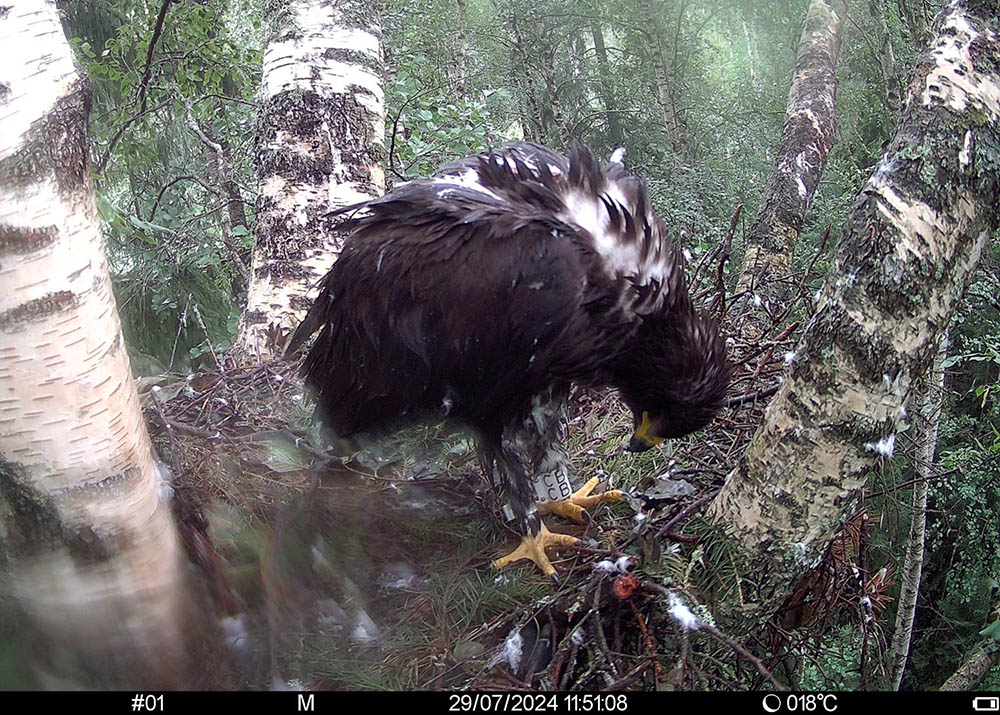
The Riks case demonstrates the crucial role modern geo-location monitoring plays in the protection of migratory birds – enabling rapid response, documenting threats and better planning of future conservation measures. Detailed information on this case was published by our LIFE project partner, Doğa Araştırmaları Derneği.